Bio Ethanol
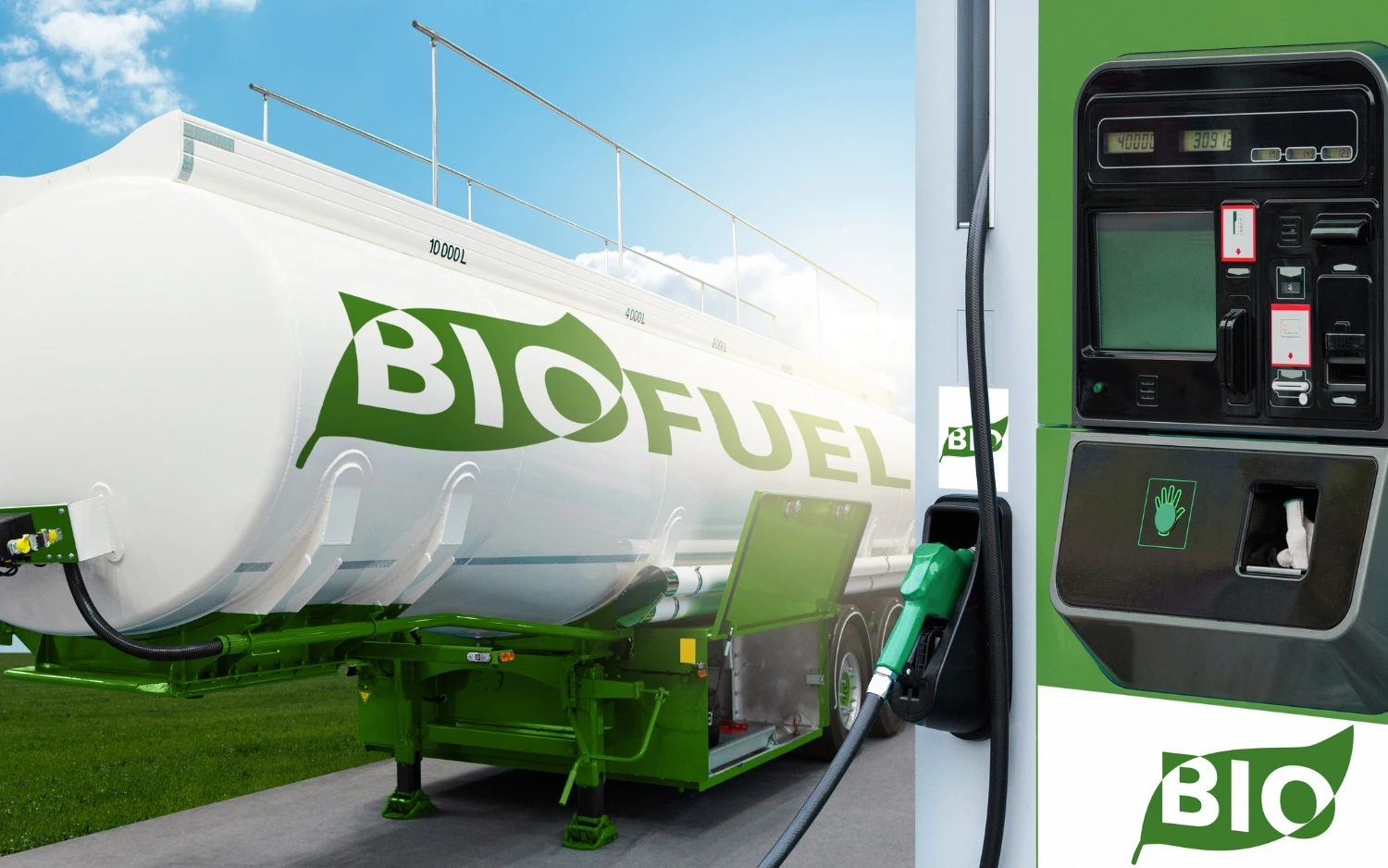
Bio ethanol is a renewable, environmentally friendly fuel made from ethanol fuel such as crops and agricultural waste. It decreases carbon emissions, promotes sustainable energy, and provides a cleaner alternative to fossil fuels.
What is Bio-Ethanol?
Project Report For Fast Food Centre is as Follows.
Fast food centers, also known as quick-service restaurants (QSRs), have become an integral part of modern-day dining culture. These establishments offer a wide variety of delicious, affordable, and conveniently prepared food options, attracting customers from all walks of life. The rise of fast food centers can be attributed to the rapid pace of contemporary lifestyles, the desire for convenience, and the evolution of culinary preferences.
Fast food is a form of food that is mass-produced and supplied to clients rapidly. It usually comprises of pre-cooked meals that are stored ready for when a customer arrives. Other semi-prepared components include frozen cooked meat, boiled and cut veggies, and so forth. As soon as the orders arrive, the chefs cook the food in a flash, serve it to dine-in customers, and pack it for take-out. Fast food restaurants offer quick service and may have a seating area.
Domestic Uses of Bio-Ethanol
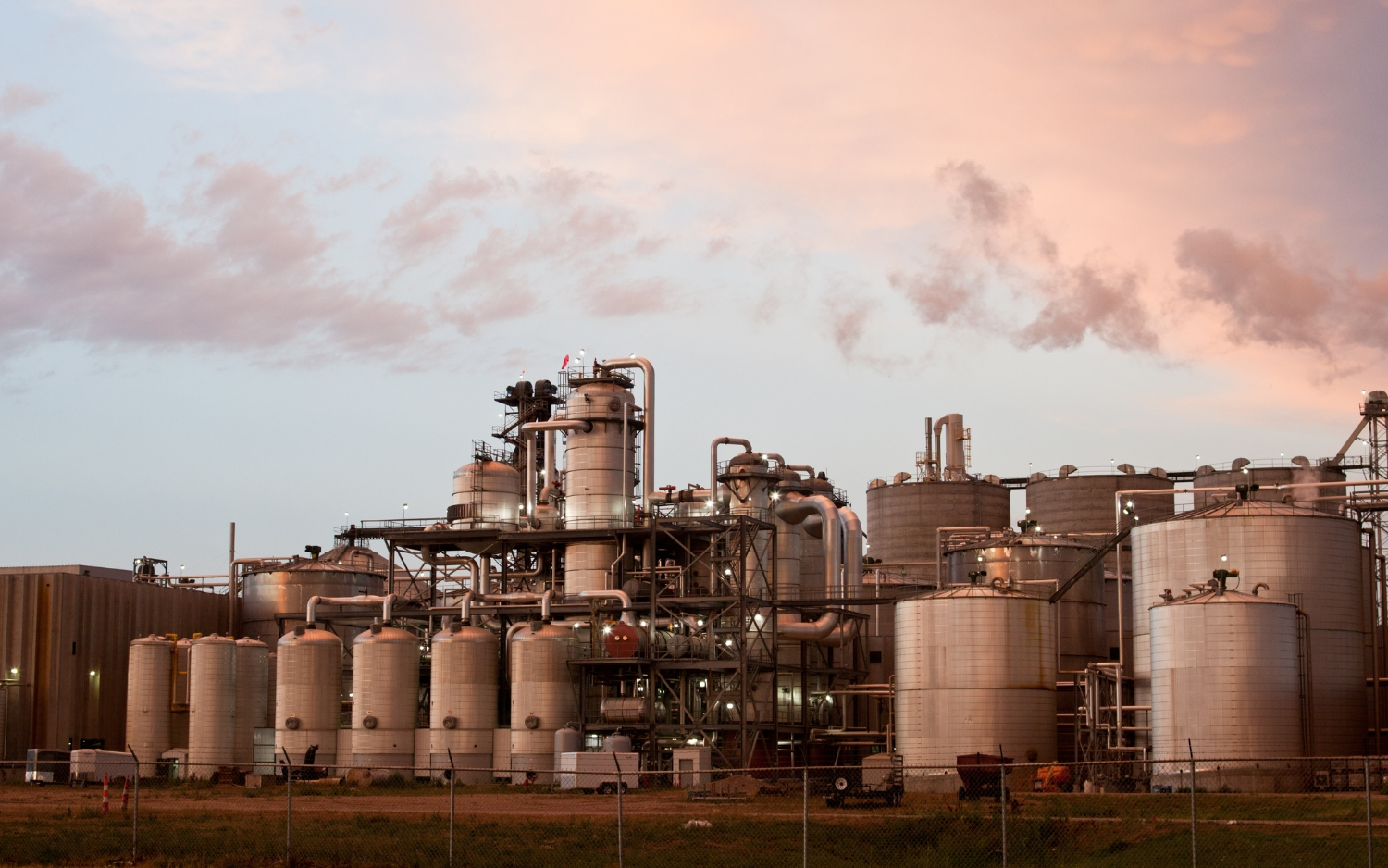
Bioethanol, a versatile and environmentally friendly fuel, is rapidly being used in homes due to its renewable and clean-burning features. It is a viable alternative to traditional fuels in applications such as cooking and heating, providing a sustainable answer for households. Bio ethanol fuel
stoves and fireplaces are popular choices because to their efficiency and low emissions, which result in a cleaner indoor atmosphere. It is also utilized in cleaning goods and as a solvent in household chemicals due to its non-toxic properties. By incorporating Bio ethanol fuel
into their everyday routines, households may minimize their carbon footprint and contribute to a greener, more sustainable future.
Get free Sample
Subsidies on Setting Up Bio-Ethanol Plants
A variety of subsidies are offered by the federal and state governments to encourage the construction of Bio-Ethanol plant subsidy facilities, making them economically feasible for business owners.
- Pradhan Mantri JI-VAN Yojana:
This scheme supports Second Generation (2G) ethanol bio-refineries using renewable feedstocks like agricultural waste. Financial aid is given to set up commercial and demonstration-scale bio-refineries.
2. Ethanol Blending Programme (EBP):
The program incentivizes ethanol production to achieve the target of 20% bio ethanol fuel blending in petrol by 2026, providing guaranteed procurement of ethanol by Oil Marketing Companies (OMCs) at fixed prices.
Sharda Associates ensures that clients profit from these schemes by finding the most relevant subsidies and managing the entire application process, from submission to disbursement.
Services Rendered by Sharda Associates
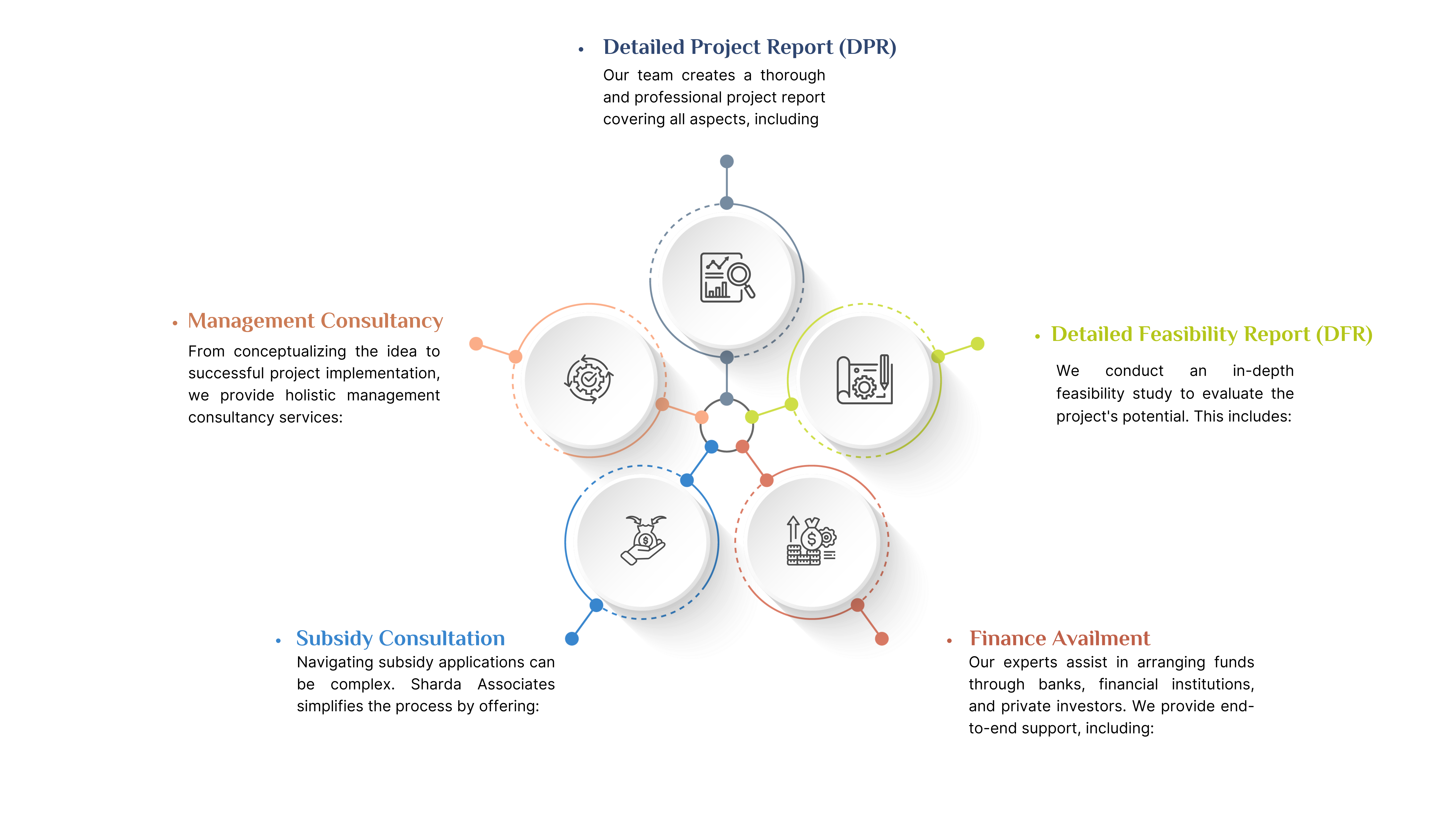
1. Detailed Project Report (DPR):
- Bio ethanol fuel Business objectives and scope
- Technical specifications and production workflow
- Market analysis and target audience
- Financial projections, cost analysis, and profitability assessments
2. Detailed Feasibility Report (DFR):
- Raw material availability and sourcing strategy
- Plant location analysis
- Identification of risks and mitigation measures
- Assessment of compliance requirements and sustainability goals
3. Finance Availment:
- Loan application preparation
- Negotiating favorable terms and conditions
- Ensuring timely fund disbursal
4. Government Push for Renewable Energy:
- Identification of applicable subsidies
- End-to-end documentation support
- Regular follow-ups with authorities to ensure approval and disbursal
5. Environmental Benefits:
- Assisting with machinery procurement and vendor selection
- Setting up production workflows and quality assurance systems
- Ensuring legal and environmental compliance
- Developing strategies for market entry and operational efficiency
Market Potential of Bio Ethanol
As of 2026, India has achieved its ethanol blending target of 20% (E20) in petrol, and starting April 1, 2026, the sale of petrol with up to a 20% ethanol blend nationwide has been made compulsory as part of its clean energy transition under the Ethanol Blended Petrol (EBP) Programme. This milestone reflects India’s progress in renewable fuels and indicates strong ongoing demand for ethanol production in the domestic market, making bioethanol plant investments especially timely.
Why Choose Sharda Associates
- 45,500+ project reports delivered — including Bio CNG, biogas, biomass, and renewable energy projects across India. We understand the technical complexity of feedstock analysis, gas yield calculation, and purification system specification that Bio CNG DPRs demand
- MNRE subsidy documentation expertise — we prepare DPRs specifically aligned with MNRE’s CFA application format (₹4 crore per 4,800 kg/day for new plants). Subsidy application and disbursement documentation handled end-to-end
- Feedstock-specific financial projections — revenue projections built on actual biogas yield data for your specific feedstock — agricultural residue, food waste, cattle manure, or MSW. Not a standard template applied to every plant
- Technical + financial in one report — Bio CNG requires both a Detailed Project Report (DPR) and a Detailed Feasibility Report (DFR). We prepare both — covering plant sizing, digester design basis, purification system, compression, and complete 10-year financial model with DSCR
- Bank and MNRE liaison support — if the bank or MNRE raises a technical or financial query after submission, we respond. Our support does not end at delivery
- Starting at ₹4,999 for Bio CNG DPR · 5–7 working day delivery — Bio CNG is a complex project and we treat it accordingly. No rushed templates, no generic numbers
📞 +91 89899 77769 | Bhopal, MP | All India service
Frequently Asked Questions
Q1: What is Bio CNG and how is it different from regular CNG?
Bio CNG (Compressed Biogas) is produced from organic waste through anaerobic digestion — the same biological process that naturally decomposes organic matter. The biogas produced (mainly methane and CO₂) is purified to remove CO₂, H₂S, and moisture, then compressed to produce Bio CNG with 95%+ methane content. Regular CNG is extracted from natural gas fossil fuel deposits. Bio CNG has an identical calorific value and can be used in the same vehicles and industrial equipment as fossil CNG — but is renewable, carbon-neutral, and earns carbon credits.
Q2: What feedstock can be used for a Bio CNG plant in India?
Bio CNG plants can use any organic material that undergoes anaerobic digestion. In India, the most common feedstocks are: agricultural residues (paddy straw, wheat straw, sugarcane bagasse, cotton stalk), cattle and buffalo dung from dairy farms and goshalas, food waste from hotels, restaurants, and APMC markets, municipal solid waste (organic fraction), press mud from sugar mills, poultry litter, and sewage sludge from STPs. Feedstock availability and biogas yield per tonne vary by type — this is the most critical input for plant sizing and financial projections.
Q3: What is the MNRE subsidy for Bio CNG plants in India?
he Ministry of New and Renewable Energy (MNRE) provides Central Financial Assistance (CFA) under its Waste to Energy Programme: for new biogas plants upgrading to Bio CNG — ₹4 crore per 4,800 kg of Bio CNG per day of production capacity. For existing biogas plants being upgraded to Bio CNG — ₹3 crore per 4,800 kg/day. Maximum CFA per project is ₹10 crore. Applications are submitted through MNRE’s online portal with a DPR in prescribed format.
Q4: What is the minimum plant size for a viable Bio CNG project?
The minimum economically viable Bio CNG plant size is typically 1–2 tonnes of Bio CNG per day (1,000–2,000 kg/day). Below this scale, the cost of purification and compression equipment per unit of output becomes uneconomical. A 1 tonne/day plant requires approximately 20–30 tonnes of wet organic feedstock daily. MNRE’s CFA is calibrated to 4,800 kg/day increments — a project sized at this scale or above maximizes subsidy per kg of capacity.
Q5: What is the project cost for a Bio CNG plant in India?
Project cost varies significantly by plant capacity, feedstock type, and location. A small-scale 1 tonne/day plant costs approximately ₹3–5 crore (before subsidy). A medium-scale 5 tonne/day plant costs ₹12–20 crore. A large-scale 10 tonne/day plant costs ₹25–40 crore. Key cost components are digester construction (civil), biogas purification unit (upgrading system — PSA or water scrubbing), gas compression and storage, and gas dispensing or pipeline infrastructure.
Q6: What is the revenue model for a Bio CNG plant?
A Bio CNG plant generates revenue from multiple streams: sale of compressed Bio CNG (to OMCs like IOCL, BPCL, HPCL under offtake agreements, or directly to industrial/fleet customers), sale of fermented organic manure (FOM) — the digestion residue is a high-value organic fertilizer sold at ₹3,000–8,000 per tonne, carbon credits (Bio CNG qualifies for carbon credit generation under UNFCCC protocols), and tipping fees charged for accepting food waste or MSW feedstock from municipalities. The multi-revenue model significantly improves financial viability and DSCR.
Q7: What are the major government schemes supporting Bio CNG in India?
Beyond MNRE’s CFA, Bio CNG projects can access: SATAT scheme (Sustainable Alternative Towards Affordable Transportation) — administered by MoPNG, guarantees offtake of Bio CNG by OMCs at predetermined price; PM JI-VAN Yojana — capital subsidy for second-generation biofuel projects including Bio CNG; NABARD refinance for agriculture-based biogas and Bio CNG projects; state-level renewable energy policies (MP, Maharashtra, Punjab, Haryana have specific Bio CNG support schemes); and priority sector lending classification for bank loans to renewable energy projects.
Q8: What licences and approvals are required for a Bio CNG plant?
Key clearances include: State Pollution Control Board (SPCB) NOC / Consent to Establish and Consent to Operate, petroleum storage licence (for CNG storage) from the Chief Controller of Explosives (PESO), land use / zoning approval, electricity connection for plant operations, MNRE registration for CFA eligibility, SATAT registration with OMCs for offtake agreement, BIS certification for compressed gas cylinders and dispensing equipment, and local municipal / panchayat NOC for plant site. The regulatory clearance timeline is 6–12 months and must be factored into the project implementation schedule in the DPR.
Q9: What is the payback period and ROI for a Bio CNG plant?
For a well-structured Bio CNG project with MNRE CFA subsidy, SATAT offtake agreement, and FOM sales, the typical payback period is 4–7 years. IRR (Internal Rate of Return) ranges from 15–25% depending on plant scale, feedstock cost, and Bio CNG selling price. Larger plants (5+ tonnes/day) achieve better economics due to fixed cost distribution. Key variable is feedstock cost — projects with zero-cost feedstock (food waste tipping fee or agricultural residue collected free) significantly improve ROI.